|
Collaboration between diet and
vitamins
against life-style related diseases
Kayoko Adachi, Nutrition Control
Room Manager, Senpo Tokyo Takanawa Hospital
|
Kayoko Adachi |
Introduction
"Food with nutrient function claims," which complements
vitamins as food other than the general food products, has been
standardized in concurrence to system establishment. The purpose
of this food is to supply/complement nutrients (minerals, vitamins,
etc.) necessary for healthy growth, development, and maintenance
of health, and the food is to supply/complement the nutriments when
it is difficult to have normal diet due to aging, disturbed dietary
habits, etc. and thus difficult to take enough nutrients required
for one day. The 12 vitamins that are required to be indicated are
A, D, E, B1, B2, B6, B12, C, niacin, folic acid, biotin, and pantothenic
acid. However, the problem is how to find what types of people tend
to have vitamin insufficiency and recommend if proactive supplement
is necessary depending on the intake of general food products.
|
|
1. Situation of vitamin intake seen from
the National Nutrition Survey and the menus of our hospital
The situation of vitamin intake according to the National Nutrition
Survey for 2001 shows 75 - 85% sufficiency rates for vitamins B1,
B6, E and niacin in men and nearly sufficient in women compared
to the 5th nutrient requirements. However there is a sort of trap
here. Because it is the generation in which it is said that lipid
ratio of 25% or smaller and energy intake that will not cause obesity
are necessary for maintaining health but these are actually taken
too much. That is, considering that vitamin E is taken from oils
and fats, rate of sufficiency cannot be taken as it is.
As a result of examining the normal meals (approximately 2,000kcal)
and diabetes meals of 1,600kcal in our hospital, vitamins E and
B6 were not sufficient in 2,000kcal meals, showing similarity to
National Nutrition Survey. In the 1,600kcal meals, vitamin B1 was
also insufficient (Figure 1). On the other hand, vitamins A (retinol),
D, and B12 were sufficient in either meal.
When looking at the intake level and rate against the required
nutrient level of vitamin E with extremely low sufficiency for each
food group, it was taken as 2.6mg (26%) from oils and fats, 2.0g
(20%) from dark green and dark yellow vegetables and 1.6mg (16%)
from fishery products (Figure 2). For the 1,600kcal meals which
are the energy-restricted meals for diabetes or obesity patients,
vitamin E reaches only 5.4mg (54%) since fishery products and meat
with much oils and fats to be added are reduced. Considering this,
it is extremely insufficient in people with low energy intake or
on diet, people who do not eat fishery products much, and people
who often eat out. In other words, vitamin E cannot be taken sufficiently
by people who takes little oils and fats unless they select the
food products to eat with considerable knowledge. Next, which food
products are used to take vitamin B6 in the menu of 2,000kcal
|
meals was examined, and it turned out that it was taken from a
very limited group of food products including 0.72mg (44%) from
vegetables and fruits and 0.27mg (38%) from fishery products (Figure
3). Examining the intake levels in National Nutrition Survey by
age, vitamin B6 is not sufficient in ages 15 - 49 for both men and
women. It is thus surmised that vegetables and fishery products
are started to be taken only after reaching the fifties.
2. Current state of supplement intake and
dietary habits
According to the National Nutrition Survey, 65.3% of men and 67.4%
of women among those who take vitamins and minerals from sources
other than the general food products answered "nearly everyday,"
and those who answered "nearly everyday" were largest in number
in any age group for both men and women. The problem is that those
with undernourishment have low vegetable intake levels and many
use of supplements (Figure 4). Furthermore, when looking at the
types of supplements by the age group, ages 15 - 49 in both men
and women had "vitamin C" supplements in the largest numbers. It
can be interpreted that they recognize vegetable insufficiency or
that they think it will work as alternative to vegetables. On the
other hand, it is reported that largest portion of men over 50 years
old take "vitamin B1" and that of women at ages 50 - 69 take "vitamin
E."
Looking at the 2,000kcal meals of our hospital, not only vitamin
C but also approximately 40% of vitamin B6, 20% of vitamin E, 25%
of calcium as well as folic acid, iron, dietary fiber, etc. are
taken from the vegetables. That is, those with vegetable insufficiency
also lack in these other nutrients. Naturally, those who "do not
take enough nutrients from food" or those with undernourishment
should improve their diet, and it is needless to say that education
on this matter is necessary.
|
|
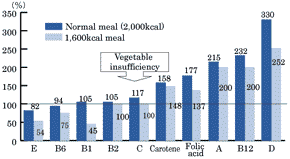
Figure 1 Vitamin sufficiency rates in normal and 1,600kcal
meals (men of ages 50 - 60)
However, it is also necessary that vitamin supplement that
suits the individual dietary habit shall be made possible
for those who cannot improve their dietary habits completely.
3. Supplement vitamins depending on
the individual situation and dietary habit
1) People on diet, with diabetes and/or hyperlipemia.
Those who are on diet tend to reduce grains, oils and fats,
and meals in order to reduce the energy intake, and they may
cause vitamin B1 insufficiency. However, diabetes patients
who needs to limit sugar intake and hyperlipemia patients
who need to reduce meat intake fall in the dilemma in which
more nutrient insufficiency is case as they use better dietary
therapy. It is necessary that vitamin B1 insufficiency be
assumed and checked if symptoms of fatigableness, low concentration,
irritation, etc. are seen. That is, "reducing grains" also
means "reducing protein, dietary fiber, zinc and magnesium."
In addition, reduction of oils and fats will cause reduction
in vitamin E, and reduction in meat will make it difficult
to take sufficient amounts of vitamins B1, B2, B6, etc. Therefore,
it is desired that those who need to lose weight or those
with tendency for diabetes or hyperlipemia shall supplement
vitamins E and C and antioxidant substances such as Beta-carotene
besides general food products.
Furthermore, please note that the vitamin B6 has been reported
to cause sensory nerve disorders by excessive intake, and
the tolerable upper limit intake level is stipulated as 100mg
in Japan.
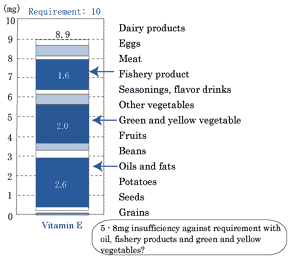
Figure 2
Vitamin E intake by the general food group and dietary habits
|
2) People with vegetable/seaweed insufficiency and people
who often eat out or have large stress
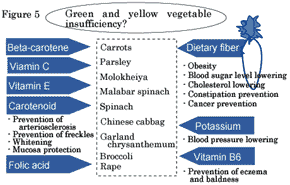
Those who often eat out tend to have vegetable insufficiency.
Such people cannot take sufficient vitamins C, B6, and E,
Beta-carotene, calcium and potassium (Figure 5). We recommend
that those who cannot improve such dietary habits should take
food with nutrient function claims containing these or green
soup, chlorella, food containing browse from wheat, barley
etc., wild rice, vegetable oil containing vitamin E, etc.
In addition, those who are under large stress will have vitamin
C, calcium and magnesium discharge in urine and should take
vegetables and dairy products or take supplements if it is
difficult to take such food products.
3) People with habits to drink heavily and cannot restrict
People with habits to drink heavily tend not to eat much
food or much vegetables or seaweeds even if they eat, leading
to skipping of breakfast and eating out for lunch in many
cases. Then naturally many types of vitamins will become insufficient.
They may cause insufficiency in various vitamins not only
vitamin B6, C, E, K and folic acid from vegetable but also
B1 from grains. Moreover, heavy drinkers are said to deteriorate
in vitamin D, K and folic acid absorption from intestines
and may lead to insufficiency. Therefore, they shall first
try to take dark green and dark yellow vegetables. However,
if it is difficult, they shall be complemented with chlorella,
herbs, or seaweed supplements.
In addition, it is known that daily folic acid intake of
5,000μg or larger may hide the symptoms of vitamin B12 insufficiency
and lead to damaged nerves. Thus it shall be used in combination
with vitamin B12 supplement. And the tolerable upper limit
of 1,000μg shall be observed.
4) People who cannot stop smoking
Those with smoking habits are known to have large vitamin
C consumption and reduce vitamin B12 stored in tissues, and
it has been proved that smoking significantly deteriorate
the serum concentrations of folic acid and zinc. Though what
shall be prioritized is to stop smoking, those who cannot
do so shall take vegetables and fruits. Those who cannot even
take vegetables and fruits should supplement with food with
nutrient function claims containing vitamin C and folic acid,
food containing browse from wheat, barley etc. with large
vitamin C content or chlorella.
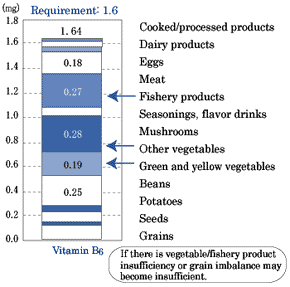
Figure 3
Vitamin B6 intake by the general food group and dietary habit
|
|
| |
|
5) Vitamins recommended for people in middle ages and
over
Active oxygen (free radical) accelerates aging. It is desired
that people with rather high blood sugar levels or serum lipid
levels should proactively supplement vitamin E, C, Beta-carotene,
coenzyme Q10, isoflavone, polyphenol, lycopene, chitosan,
catechin, sesame seed lignan (sesaminol), etc. which are antioxidant
substances that suppress active oxygen. Among these, coenzyme
Q10 has been proved to reduce the oxidized vitamin E and return
stable vitamin E, and it is said that its antioxidant effect
lasts longer than the single use of vitamin C or E.
4. Points in complementing vitamins
The points in taking and selecting vitamins are the following.
(1) Look at the ingredient labeling and raw materials. (2)
Know that there are nutrients and food products that may have
toxicity by excessive intake. (3) Check if they have interaction
with kidney disease, allergy, pregnancy, and drugs. (4) Select
by assuming the
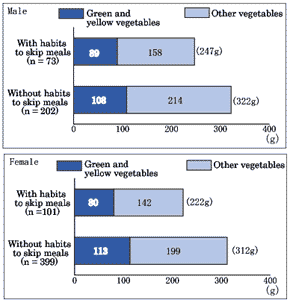
Figure 4
Vegetable intake levels by the habit to skip meals for those
who take vitamins and minerals for the purpose of "supplementing
insufficient nutrients"
|
nutrient excess or insufficiency by individual dietary habits.
(5) Observe the specified intake method and volume. (6) Observe
with small levels. (7) Divide the volume and take uniformly
at 2 - 3 times per day instead of taking at once. (8) Check
if they are taken redundantly. If you have kidney disease,
supplements with large protein, potassium or phosphate contents
shall be avoided, and if you are pregnant, supplements should
not be taken unless a specialist is consulted.
5. Conclusion
Our national dietary habits have changed to skipped meals,
habits to eat out, use of cooked products or fast food, and
transition from traditional Japanese food to European and
American food though it also depends on the generation and
sex. It is considered that in people with such dietary habits,
they caused excess or insufficiency in various nutrients and
became the factors of various life style related diseases
such as hyperlipemia and diabetes. However, there are people
who cannot improve the habits even though they recognize the
adverse effects. Those who try to use vitamin supplements
as alternative food products may be the ones who are rather
more interested in health and nutrients. If so, leading them
to improve the dietary habits gradually in concurrence to
use of supplement may be more advantageous.
|
Life Style Related Diseases: Current State
of Obesity and Diabetes in Japan
Material: Ministry of Health, Labour and Welfare
(2001 National Nutrition Survey, 2002 Diabetes Status Survey)
|
Diabetes
Preliminary report
from 2002 Diabetes Status Surve
Number of people surveyed: 5,792 (2,369 men and 3,423
women) Time of survey: November 2002
Implemented simultaneously with National
Nutrition Survey and Physical Conditions Survey
Estimated number of people suspected
to have diabetes
| |
2002 |
1997 |
| People strongly suspected to have diabetes |
Approx.7.4 mio |
Approx.6.9 mio |
| People who cannot be denied of possibility to
have diabetes |
Approx.8.8 mio |
Approx. 6.8 mio |
| Total |
Approx.16.2 mio |
Approx. 13.7 mio |
|
Obesity
Rates of obese people (with BMI25.0 or higher*)
| |
Male |
Female |
| |
% |
n(no. of people) |
% |
n(no. of people) |
| Ages 20-29 |
18.1 |
414 |
7.4 |
552 |
| 30-39 |
29.3 |
559 |
14.3 |
753 |
| 40-49 |
31.8 |
620 |
17.1 |
759 |
| 50-59 |
31.9 |
744 |
25.1 |
916 |
| 60-69 |
31.2 |
693 |
30.5 |
832 |
| 70 or older |
21.0 |
585 |
28.8 |
817 |
| Total |
28.0 |
3,615 |
21.6 |
4,629 |
*Obesity judgment criterion by
BMI (Japan Society for the Study of Obesity)
BMI = weight (kg) ÷ (height m)2
Less than 18.5: Low weight (thin)
18.5 or higher and less than 25.0: Normal
25.0 or higher: Obese
|
Age-related Macular Degeneration
(AMD) and Antioxidant Substances
From Hannah Bartlett, et al., Ophthal. Physiol.
Opt. 2003 23: 383-399
Age-related macular degeneration (AMD) is
one of the causes for sight loss in advanced nations. Since
there is no effective cure and oxidation is considered as
one of the factors, there are growing interests in preventive
effects of antioxidant nutrient intake. This article reviews
the 7 random assignment comparison tests implemented on
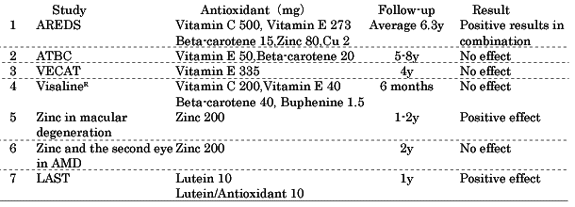
the effect of antioxidant substance intake in AMD. Among
these, effect of antioxidant substance intake against AMD
was observed in 3 zinc studies by AREDS, LAST, and Newsome,
et al. (Table 1). The following provides an outline of the
LAST study in which effect of antioxidant substances on
AMD was observed, as well as discussion on the relationship
between various antioxidant substances and AMD that is surmised
from the study results in the past.
|
LAST(The Lutein Antioxidant
Supplementation Trial)
Subject:90 atrophic AMD patients with average
age of 74.7±7.1
Method: Patients were
assigned to 3 groups (age, time of AMD crisis, smoking
habit, history of cardiovascular diseases, iris color
lens, nutritionsl status, etc. were matched).
(1) Lutein : 10mg
(2) Lutein / antioxidant : 10mg
(3) Placebo
Outcomes: Lens opacification,
glare recovery, low luminance/low contrast visual
acuity, contrast sensitivity, etc.
Result:In lutein intake
group and lutein + antioxidant substance intake group,
results of glare test, contrast sensitivity, etc.
were improved significantly.
<Vitamin C>
Vitamin C is a water-soluble antioxidant substance,
and it delivers effects against hydroxyl-radicals, super
oxides, singlet oxygen, etc. In a study by the EDCCS
group, the risk for AMD increases when the vitamin C
concentration in blood plasma is low. However, it has
been reported that no preventive effect was observed
when vitamin C concentration in blood plasma is high
(The Eye Disease Cae Control Study Group, Arch. Opthalmol.
111, 104 - 109, 2003). As the preventive effects against
oxidative damage of tissues by free radicals, the effect
to delay the advance of disease is also expected to
be included. |
<Vitamin E>
There are 4 types of vitamin E called α-, β-, γ-
and δ-tocopherol. The one most activeness in human
eye retina and blood plasma is α-tocopherol, and it
delivers the highest antioxidant performance. The
preventive effect of vitamin E against AMD is indicated
in epidemiological study results related to intake
by AMD patients or vitamin concentrations in blood.
A large level of vitamin E is found inside the eye
retina, and it prevents excessive oxidation of lipids.
It also has the effect to remove singlet oxygen. Though
vitamin E concentration decreases following aging,
eye retina concentration can be increased by taken
the vitamin in large amount. In addition, it has been
observed that increase in vitamin E concentration
in blood plasma reduces the AMD risk.
<Lutein/zeaxanthin>
Lutein and zeaxanthin are assumed to protect the
eye retina by the two methods of absorption of blue
light and prevention of oxidation.
Absorption of blue light:
Lutein and zeaxanthin shields short-wavelengths and
prevents oxidation by blue light to function as an
effective blue light filter. The observed action spectrum
for light shielding is 400 and 450nm at maximum, and
these coincides with the absorption spectra for macula
lutea pigments.
Prevention of oxidation:
Carotenoid has elimination function against singlet
oxygen or hydroxy-radicals that are generated by excessive
oxidation of lipids, and prevents oxidation of tissues
by light or metabolism.
|
Table 1. Randomised controlled trials included in the review
1) The AREDS Research Group (2001), Arch.
Opthalmol. 119, 1417-1436
2) Teikari et al. (1998), Acta Ophthalmol. Scand. 76, 224-229
3) Taylor et al. (2002), Br. Med. J. 325, 11
4) Kaiser et al (1995), Ophthalmologica 209, 302-305
5) Newsome et al. (1988), Arch. Ophthalmol. 106, 192-198
6) Sturら(1996), Invest. Ophthalmol. Vis. Sci. 37, 1225-1235
7) Richer et al. (2002), Invest. Ophthalmol. Vis. Sci. 43
|
|
| |
| |
|
