|
Prof. Isao TOMITA, Faculty of Professor of Life Science, Shizuoka Sangyo University Introduction |
| In an era when all diseases were considered to be caused by toxin or bacteria, I imagine that it must have taken quite a daring change of conception to advance the theory that beriberi is caused by deficiency of a micronutrient. The disease occurred in many localities in Japan, where people live on rice (white rice). A factor that prevents the disease, vitamin B1, was discovered in 1910. Since then, a number of diseases have become part of the history of vitamin discoveries; scurvy, pellagra, rachitis, and pernicious anemia, among others. Later, as vitamins came to be widely used as medicine, there was a time when attention was focused on the mechanism of vitamins' functions, especially on the functions of water soluble vitamins as coenzymes and as factors involved in the maintenance of higher dimensional structures of proteins. Recently, in response to the advance of molecular biology, keen attention has come to be paid to the functions of fat soluble vitamins and their metabolites involved in signal transduction. At present, as the effects of anti-oxidative vitamins on the prevention of present-day diseases such as cancer, diseases in the circulatory system, and mental stress (oxidation stress) are attracting attention, it is to be hoped that through elucidation of the functions of vitamins, medical use of vitamins will result in overcoming such diseases as soon as possible. |
| The 51st Conference of the Japan Vitamin Society, for which we have been preparing for a long time, is finally approaching. As we have already stated in the Vitamins Journal (Vol. 73, No. 1-3), the conference will be held at the Convention Arts Center (nicknamed "the Grand Ship") in Shizuoka Prefecture on June 3rd (Thu.) and 4th (Fri.). The building has been built only recently near JR Higashi-Shizuoka Station. Our conference rooms will be on the 10th and 11th floors, from which we can enjoy a wonderful view of Nihon-Daira and Mt. Fuji. I'm sure it will please you all. |
| On both days, the conference will be held in 3 different rooms; Conference Rooms No. 1 to No. 3. The first day begins at 9:20 a.m., the second day at 9:10. The morning of the first day will be spent on general lectures on vitamins A, B6, B1, and B2; the morning of the second day on carotenoids, vitamins E, D, and C. The general meeting, the councilors' meeting, the Vitamin Society Prize-winning lectures, and special lectures will all take place in the afternoon of the first day. There will be three special lectures; Medicochemistry of Retinoids (Prof. Koichi Sudo, Graduate School of Pharmaceutical Sciences, University of Tokyo), New World of Coenzyme Science (Prof. Kenji Soda, Faculty of Engineering, Kansai University, also professor emeritus at Kyoto University), and Variety of Vitamin D Functions and Paths to their Medical Use (Guest Prof. Yasuho Nishii, Tokyo University of Agriculture). It is expected that these lectures will provide up-to-date information on the fast-advancing area of each vitamin. The prize lectures will be: Research on Transaminases Based on their Three-Dimensional Structures (Prof. Hiroyuki Kagamiyama, Osaka Medical College), Research on TDP Enzyme, a Catalyst of Oxidative Resolution of a-Keto Acid (Assistant Prof. Yoshiko Koike, Nagasaki University School of Medicine), and an encouragement prize-winning lecture, Stereo-Selective Synthesis of Retinoid Isomers and its Application to the Elucidation of their Functions as Proteins (Assistant Prof. Akimori Wada, Kobe Pharmaceutical University). All of the lectures are expected to exhibit the prize winners' "fruits of labor" from their many years of research. There will be 113 general lectures in total. Other than the mornings of the first and second days, general lectures will also take place in the afternoon of the second day. These lectures will be on vitamin E, UQ, vitamins B12 and C, niacine, and folic acid. As usual, time afforded to a lecture is 12 min. including a question and answer period. A social meeting for members will be held on the 10th floor of the same building from after 6 in the evening. |
| As you know, Shizuoka is the birthplace of Dr. Umetaro Suzuki (1874`1943), who discovered vitamin B1 (oryzenin). His bust stands in the schoolyard of Jitokata Elementary School in Sagara-Cho, Haibara County, from which he graduated. His photograph even appeared on the local promotion tickets distributed from March 16 this year (see the original version -page.1-). In the 51st Conference, his photograph in a panel will be exhibited in his commemoration. We are also planning a tour from 1:00 p.m. to 5:00 p.m. on June 2 (Wed.), which will start from JR Shizuoka Station and visit the house where the doctor was born, his grave, and Cha no Sato (Home of Tea, a museum opened last April featuring a beautiful tea-ceremony room and a garden) (see Vitamins Journal, No. 1). Application for participation is welcome (the deadline is April 24). I hope that members who come to Shizuoka on this occasion will enjoy taking a "vitamin shower" in Shizuoka in the fresh green, where tea plantations stretch across the land. |
|
From PUFA Newsletter |
| New research findings suggest that long-chain polyunsaturated
fatty acids(LC-PUFA), such as docosahexaenoicacid(DHA) are important not
only in the development of the nervous system. They also may play a key
role in the prevention of common diseases such as Type Ⅱdiabetes, obesity,
dyslipidaemia, hypertension and heart disease-the so-called diseases of
civilisation.
All these diseases, which often occur together, are associated with
a deficiency in the action of insulin. Insulin exerts its effects on glucose
uptake mainly in skeletal muscle, and, researchers have discovered, works
better in muscles with high membrane phospholipid levels of LC-PUFA.
In the current study, the research group LA Baur and associates, Universities of Sydney and Wollagong, and Royal Prince Alfred Hospital, Sydney, Australia*, has shown that young breast-fed children have signif-icantly higher levels of DHA and total percentage of LC-PUFA in their muscle phospholipids than a comparable group of children fed on formula. They studied 13 breast-fed children and 12 fed on formula, all of whom were undergoing elective surgery. A fasting blood sample and muscle biopsy were obtained from each child under general anaesthesia. Muscle phospholipid in the breast-fed group contained 3.63% DHA compared to 1.84% in the formula-fed group, (P<0.0001). Total percentage of LC-PUFA was 30.24% versus 25.17% (P<0.0001). Fasting plasma glucose levels were, respectively, 4.7 and 5.4 mmol/L(P<0.02). Higher levels of DHA in the muscle membrane phospholipid of breast-fed children quickly diminish once breast-feeding is stopped. The researchers therefore also examined a group of 39 qge-matched children who had never, or not recently, been breast-fed. |
Higher levels of DHA in the muscle membrane phospholipid
of breast-fed children quickly diminish once breast-feeding is stopped.
The researchers therefore also examined a group of 39 age-matched children
who had never, or not recently, been breast-fed.
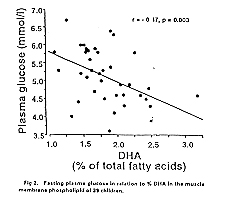
A significant inverse correlation was seen between the fasting plasma glucose level and the percentage of both DHA(r=-0.47, P<0.003) and total LC-PUFA(r=-0.38, P<0.05). The researchers note also that breast-fed babies have a muscle phospho-lipid fatty acid composition similar to that of insulin-sensitive adults, while that of formula-fed babies is similar to that of insulin-resistant adults. It is therefore interesting that, in their study, that breast-fed children had significantly lower fasting blood glucose levels than the formula-fed group. Their results, they conclude, show not only that breast-feeding increases LC-PUFA in skeletal muscle phospholipid but also that children with a lower percentage of LC-PUFA have a higher fasting plasma glucose and thus may be predisposed to the development of insulin resistance and the other diseases with which it is associated. The authors add that their study provides a possible explanation for recent findings that the incidence of Type Ⅱdiabetes among PIMA Indians-who are particularly prone to the condition is significantly lower in those who were exclusively breast-fed for the first two months of life. *Baur LA, O'Connor J, Pan DA, Kriketos AD, Storlien LH. The fatty acid composition of skeletal muscle membrnace phospholipid:its relationship with the type of feeding and plasma glucose levels in young children. Metabolism(1998); 47:105-112. |
|
|
a prospective study ABSTRACT
TABLE
|
|
Rolf Schwarzenbach F. Hoffmann-La Roche LTD Vitamins and Fine Chemicals Division Givaudan Roure Cosmetic Research CH-8.600 Duebendorf, Switzerland (Presentation at IMAGE'98 in Mumbai, India) Sun care and skin care are linked to a large extent. Many everyday skincare
products contain UV-filters and modern sunscreen formulations contain vitamins
and moisturizing agents.
SUNSCREEN PRODUCTS
EVERYDAY SKINCARE PRODUCTS
SPECIAL PRODUCTS
VITAMINS IN SKIN AND SUN CARE
LIPOSOMES AND NANOCOLLOIDS
Nanocolloids heve a monolayer membrane and are formed from a single layer of lecithin using a co-emulsifier. An oily solution of a lipophylic active ingredient can be enclosed. If the active ingredient is liquid, it may even be enclosed without any solvent. For UV-filters, the loading capacity of liposomes and nanocolloids is too small to obtain high SPF products. Active ingredients enclosed in liposomes or nanocolloids follow the law of diffusion. An exchange between the inner phase of the liposome or nanocolloid and the corresponding phase of an emulsion is likely and will depend on the nature of the ingredient and the phase. This diffusion can never be totally excluded. HOW HIGH SHOULD THE SPF BE?
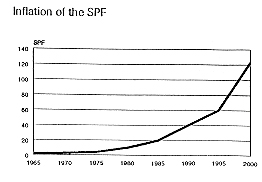
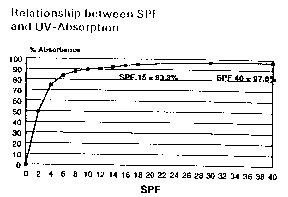
The race for higher SPF's is neither a scientific issue nor a result of health concerns. It is just a marketing argument and not any longer a protection criteria. This graphic representation of the relationship between SPF and light reduction shows clearly, that with an SPF of 2 already 50% of the UV-light is absorbed. With an SPF of 4 it is 75%, with SPF 10 absorption reaches 90%, and with an SPF of 100 it is 99%. Besides the fact that SPF's higher than 25 can not be determined on humans, due to large standard deviations, labeling a sunscreen with much over SPF 30 is questionable.
SPF AND UV-FILTER CONCENTRAION
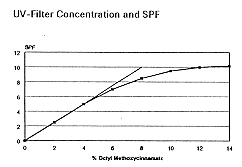
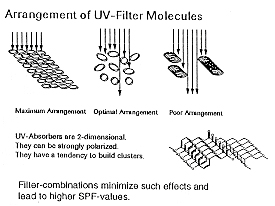
The performance of a UV-filter in a sunscreen emulsion depends on several factors. For instance the spreadability of the product on skin as well as the dry-out speed and state influesnce the efficacy. There is also no linear relationship between UV-filter concentration and SPF. High concentrations, even if legally allowed, may not lead to an expected increase in SPF. UV-absorbing molecules are two-di-minsional and therefore have a ten-dency to build clusters. Such clusters lead to lower efficacy. Using mixtures of 2 or more UV-filters does minimize the build-up of such clusters. Some polymeric ingredients can also prevent cluster building to some extent. They are therefore often marketed as SPF-Boosters.
Certain combinations of UV-filters lead to synergies. Such synergies
are independent of the product form or additional ingredients, but are
rather the result of an interaction between the UV-filters themselves.
With combinations of UV filters, the SPF can be up to 50% higher than calculated
using results obtained with a single UV filter.
|
| PHOTOSTABILITY
The photostability issue of the past years was hyped as a marketing tool for differentiation and has nowadays drawn less attention. An organic filter molecule changes its state by absorbing energy. The molecule may digest this energy by cis/trans isomerization or enol/diketo tautomerization. From the triplet energy state the molecule may return to a new ground state and thereby build a photo product. However, this is neither a safety nor an efficacy issue, since photostability and photo products have been studied extensively at the time of the development of the UV-filter. For further explanation on this topic, refer to the specific literature. The claim "photostable" on an end product is a sales pitch and linking
the SPF value with this claim is highly misleading for the consumer. Any
SPF labelled has been determined on humans, which were exposed to at least
the same number of minimal erythemal doses. Any photochemical changes during
this exposure are not detectable. Therefore, the photostability has been
proven already during the measuring experiment!
UV-A PROTECTION
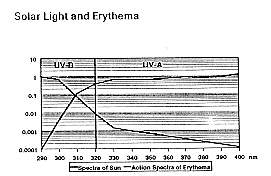
1.5% of sun radiation (22 W/m2) are in the UV-B range, 6.5% (86 W/m2)
is UV-A radiation, 39% (532 W/m2) is visible light and 53% (722 W/m2) is
infrared light.
In contrast to UV-B, which is absorbed by window glass up to 96.5%,
only 15% of UV-A is absorbed. 100% of UV-B is absorbed by the stratum corneum
and the epidermis, but about 35% of UV-A reaches the dermis and will most
probably have impact on living cells.
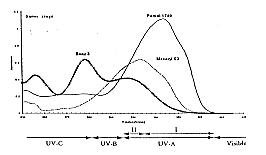
These absorptin curves have been recorded of solutions with identical
concentration (10 mg/ml in ethanol).
SKIN PENETRATION OF UV-FILTERS
Percutaneous absorption is the result of interfacial diffusion of the UV-filter(s) from the vehicle (emulsion or solution) into the stratum corneum. How strong this diffusion is, depends on the nature of the UV-filter and the vehicle. The vehicle is an important parameter in skin penetration. There are several polymers offered as cosmetic ingredients to reduce skin penetration of UV-filters. However, it is important to realize, that diffusion from the cosmetic product into the skin is a question of equilibrium, and the addition of other ingredients may influence the equilibrium in either direction, but can never totally prevent penetration. NEW DEVELOPMENTS
In addition, the polymeric moiety increases the substantivity to the stratum corneum. Such UV-filters have ideal properties for day creams, which may be applied 365 days per year and where minimal or no skin penetration, excellent skin friendiness, and high substantivity is more important than a high SPF performance. 1Commission Internationale de L'Eclairage-International Committee for the standardization of the measurements for light and colors |
|
From VNIS BACK-GROUNDER Vol.6, No.1 |
| Antioxidant Defenses. The body's antioxidant defense system
minimizes the damage caused by free radicals. This defense system includes
the antioxidant enzymes superoxide dismutase (containing zinc, copper and
magnesium) and glutathione peroxidase (containing selenium), the antioxidant
vitamins E and C, and carotenoids such as beta carotene. Physical training
has been shown to augment antioxidant enzyme defenses and reduce lipid
peroxidation, but the degree to which this adaptation occurs is not yet
known. Weekend athletes who tend to overexert themselves on an irregular
basis may not have the augmented defense system produced through continual
training and therefore may be more susceptible to oxidative stress.11
Vitamin E is the most important fat-soluble antioxidant in the body, protecting cell membrances from oxidative free radical attack. Vitamin C is an effective vater-soluble antioxidant, found in the fluid compartments within and between cells. In addition to being an antioxidant itself, vitamin C has the ability to regenerate vitamin E. Vitamin E has been shown to reduce the oxidative stress that accompanies or follows exercise. The increases in biochemical markers of free radical damage observed with exercise are reduced by vitamin E supplements.13-15 Plasma MDA and expired pentane were also reduced by a combination antioxidant supplement containing vitamin E, vitamin C and deta carotene.16 However, the clinical significance of reducing oxidative stress in exercise is yet to be determined. Antioxidants in Attenuation of Muscle Damage.
Most exercise results in some skeletal muscle damage, but unaccustomed exercise can cause extensive damage. Researchers theorize that if free radical injury is an important factor in the etiology of exercise-induced muscle damage, then increasing the antioxidant defense system by increasing intake of vitamin E and/or C should attenuate the muscle injury and subsequent effects, particularly in infrequent exercisers.18 |
In a double-blind, placebo-controlled trial, the effects of vitamin
E on exercise-induced oxidative stress were examined in young (22-29 years
old) and older (55-74 years old) men who exercised by running downhill.
A supplement containing 800 IU of vitamin E was given each day for 48 days.
The vitamin E treatment showed minimal effects on the responses of the
young subjects, but had a substantial effect on the responses of the older
men, presumably by restoring the ability of the immune cells to invade
the damaged muscle and stimulate repair.15 In another placebocontrolled
trial, 3000 mg vitamin C was given for three days prior to and four days
after an exercise of the calf muscles that was designed to induce delayed
onset muscle soreness. Less soreness was experienced by those taking vitamin
C than those taking the placebo.19
Muscle damage from eccentric exercise not only results in increased release of muscle enzyme and disruption of muscle fiber ultrastructure, but also the loss of contractile performance. Recovery of contractile function after exercise was reported to be greater in subjects given 400 mg of vitamin C 21 days before and seven days after exercise, compared to a group receiving a placebo and to a group receiving 400 IU per day of vitamin E.17 These studies suggest that vitamin E supplementation reduces the biochemical markers or oxidative stress and muscle damage, and that vitamin C will alleviate muscle soreness and enhance return of muscle function following eccentric exercise. Since the studies in general had small sample sizes, further studies are needed to confirm the role of antioxidants in exercise-induced muscle damage and to determine whether there is a net benefit from antioxidant vitamin supplementation.20 Vitamin Supplements and Pbysical Performance.
In general, the data do not support this notion.
|
| Despite the fairly consistent evidence that vitamin E mitigates
oxidative damage to muscles, no significant effect of vitamin E supplementation
on human performance has been observed.5.9.22.23 One possible exception
is the observation that supplementation with 300-1200 IU a day of vitamin
E improved VO2 max in mountain climbers at high altitudes.9.24 The improved
performance at high altitudes could be a result of the vitamin's antioxidant
activity and/or could reflect the reduction in blood viscosity resulting
from reduced leukocyte count following vitamin E supplementation.24
In contrast, approximately 20 reports have indicated some benefit from vitamin C supplementation on physical performance; however, since about the same number of studies found no effect, any conclusion is equivocal.5 The differences in results may be related to the initial vitamin C status of the subjects, which is often not reported. Subjects with low initial status might be more apt to improve than subjects with adequate status. Exercise, however, does in some manner affect the metabolism of vitamin C (increases or decreases in blood, decreases in urine, decreases in tissues such as adrenals and brain, decreased post-exercise cortisol). One review of the vitamin C literature concluded that "persons involved in strenuous physical activity on a regular basis may be advised to consume vitamin C at levels approximating those reported to produce tissue saturation (100 to 200 mg/day).n5 Anemia can occur with prolonged exercise due to increased losses of iron in the sweat and urine and increased gastrointestinal blood loss.25 In consequence, there is some increase in both iron deficiency anemia in athletes. This is of particular concern for women, who are more subject to iron deficiencies because of lower dietary intakes as well as loss of iron through the menses. If iron deficiency is determined by laboratory testing of blood samples, iron supplements may be recommended. Iron supplements generally increase iron status in iron-deficient women athletes, as indicated by plasma ferrtrin, when given at levels of 50 mg/day or more.25 Intake of such large doses might cause gastric distress, interfere with the absorption of zinc, and would be contradicted in persons with hemochromatosis. An alternative and safer method of improving iron status would be to consume 50-100 mg of vitamin C with each meal, either as part of the diet or as a supplement, to improve iron absorption.26.27 Environmenatl Hazards with Exercise. Although the health benefits of exercise are undisputed, there are some concomitant potential risks, some of which are mitigated by adequate vitamin nutrition. Since respiration increases markedly with exercise, the intake of air in physically active people is much higher than for sedentary people. Most exercise is outdoors, increasing exposure to air pollutants, excessive heat or cold, and ultraviolet light radiation. Ozone and nitrogen dioxide are potent oxidants that can damage the lungs, contribute to chronic obstructive disease and emphysema, and may trigger asthmatic attacks. Numberous studies show that ozone and nitrogen dioxide exposure in exercising normal or asthmatic adults causes a transient increase in both nasal airway constriction and in responsiveness to inhaled bronchoconstrictors.28 |
In animals, both vitamin E and vitamin C protect against ozone and
nitrogen dioxide toxicity.29 Similarly, vitamin C has been shown to attenuate
certain adverse effects of NO2 in exercising humans
. In humans, a positive correlation was found between plasma vitamin E levels and lung function in non-smokers.30 A role for vitamin C in alleviating heat stress during exercise in a hot environment has been suggested, and in fact, vitamin C supplements are given regularly to coal miners in South Africa. The practice is based on several studies conducted in South Africa mine workers during the 1970s which found that supplementation with either 250 or 500 mg of vitamin C per day improved a 10-day heat acclimation process, reduced rectal temperatures and reduced total sweat output.31.32 However, similar results have not been found in better-nourished populations than the South African miners.11.33 Additionally, significant losses of vitamin C in sweat have not been substantiated, and one early study failed to find any efffect of 500 mg of supplemental vitamin C perday on pulse rate at rest and during exercise, rectal temperatures, or the occurrence of heat exhaustion.34 Exposure to ultraviolet (UV) light causes more rapid aging of the skin and increased rates of skin cancer and cataracts. These effects are at least partially mediated by the ability of ultraviolet light to cause oxidative damage by stimulating the formation of singlet oxygen, which, while not a free radical itself, is a very reactive form of oxygen and an important source of oxidative damage in people exposed to sunlight. Beta carotene is one of the most potent known "quenchers" of singlet oxygen. Exposure to UV light reduces plasma beta carotene and suppresses the immune response. Administration of beta carotene will enhance the immune response in exposed individuals; in animal models it inhibits skin cancer induced by ultraviolet radiation.35 Vitamin E also helps protect against UV-induced immune suppression in the skin.36 Either oral or topical administration of vitamin E and will inhibit the reddening of the skin associated with sunburn.37 From AOV Newsletter Antioxidant Supplementation and Lipid Peroxidation in Smokers Previous research has shown that exposure to cigarette smoke enhances lipid peroxidation, an effect that may contribute to the causation of smoking-related diseases. This study, from the University of Washington in Seattle, tested whether supplementation with a combination of antioxidant nutrients (600 mg vitamin C, 400 IU vitamin E, and 30 mg β-carotene in a tomato-based juice) could reduce this effect. Smokers who received the supplemented juice showed improvement in several indexes of lipid peroxidation (including breath pentane excretion and resistance of low-density lipoproteins (LDL) to copper-mediated oxidation), when compared to smokers who received unsupplemented placebo juice. The authors point out that pulmonary function tests were not performed nor was it possible to compare the contribution of vitamin E to that ofβ-carotene. Nevertheless, the results suggest that a daily serving of juice supplemented with a combination of antioxidant nutrients may be of value in reducing the oxidative stress induced by cigarette smoking. |