No.105 February
 

Upon Sponsoring the 54th the Vitamin Society of Japan

Naotaka Hashizume, Professor, Ohashi Hospital Attached to the Medical School of Toho University

1. Introduction
As the name "vitamins" means amines necessary for life, the basic theme for this meeting was determined as "Vitamins and Brilliance of Life".
Vitaminology has recently experienced remarkable progress, which makes it difficult for outsiders to understand some aspects of it. The lecturers will thus be requested to speak so that their messages are clearly understandable. In addition, as participants may miss some lectures they wish to hear if the lectures are given in different rooms, we are going to make an attempt to have discussions with all participants in a large hall. As a result, general lectures will be presented through posters, but we do not make light of posters; twelve lectures will be selected carefully and presented in the large hall. These are the special features of this meeting.


The 54th the Vitamin Society of Japan will be held on April 25 (Thu.) and 26 (Fri.), 2002. This is earlier than usual, because in May and thereafter all the hotels will be occupied due to the soccer World Cup. The meeting place is Komaba Eminence, which is accessible from Shibuya Station by train, bus or taxi, but as the roads tend to be crowded, please allow about 30 min.

In the First Meeting Room, there will be a symposium by the Vitamin B Research Committee, special lecture I and educational lecture I on the morning of Day 1. In the afternoon, there will be a general assembly, followed by a ceremony of awarding society prizes, the prize-winning lectures and a symposium by the Fat-Solubility General Research Committee.
From 6:30 p.m., there will be a social meeting in the Diamond Hall. There will be a show by Bonny Jacks. We look forward to your participation.
On the morning of Day 2, there will be a report by the Japanese Discussion Committee for the Standardization of Vitamins, a symposium by the Vitamin C Research Committee and the keynote lecturer, followed by the presentation of twelve posters carefully selected from 120 posters by the members of this meeting's steering committee. In the afternoon, there will be special lecture II, educational lecture II and a panel discussion on "Vitamin Supplements" sponsored by the Vitamin Association, the Japanese Society of Nutrition and Food Science and the Japanese Organization for Certification of Supplement Advisors. Participants in this discussion will be offered 5 credits from the Japanese Organization for Certification of Supplement Advisors.

In addition, the poster section in the Second Meeting Room will be open on both days and posters will be available at any time. Baskets for Q & A cards will be provided in the room.

This meeting will attempt to hold the first citizens' open forum associated with the 54th Meeting of the Vitamin Society of Japan, sponsored by the Sankei Shimbun on April 27 (Sat.), 2002. The forum will be on "Vitamins and Brilliance of Life-Vitamins and Skin Care-" and will be held from 13:00 to 16:20 in Sankei Hall. The entire event will run from April 25 through 27, which is relatively long, but the participation of many members is anticipated.

.


Lutein Topics

Lutein and AMD

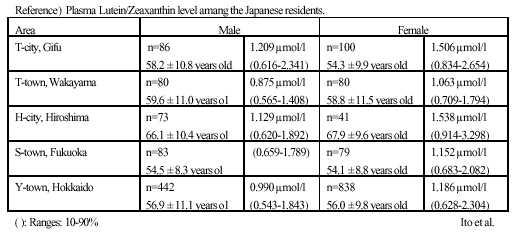
The risk of chronic diseases, such as heart disease, cancer and age-related eye diseases, increases as the average person ages. The anticipated rise in the incidence of these chronic diseases as the population ages has led to increased research on preventive approaches, including nutrition. Recent studies have found that diets rich in lutein and zeaxanthin may play a role in reducing the risk of serious eye diseases such as age-related macular degeneration (AMD) and cataracts.
AMD is the leading cause of legal blindness among the elderly in developed countries and a leading cause of vision impairment in general. Some surveys estimate that approximately 10 million Americans show early signs of this disease and 450,000 or more may already have significant vision loss from late-stage AMD. The risk of AMD increases with age and women may be at a higher risk than men. AMD is an incurable condition. Both the severity and irreversibility of AMD have prompted a search for ways to prevent or show its progression.
Please refer to VIC Newsletter No.98, 99, 101, 103 for "Lutien and AMD".
About Lutein
Lutein is a naturally occurring carotenoid typically found in dark green leafy vegetables, egg yolk and flowers, especially the Marigold family. However, unlike Beta-Carotene, Lutein is a carotenoid, which does not contribute towards vitamin A activity, but has other very significant physiological benefits.
In human, Lutein has 2 important roles:
- A light filter, able to absorb energy-rich blue light at the surface of the retina (the macula)
- An antioxidant, capable of scavenging harmful free radicals


@

Bioavailability
Studies have shown that lutein from supplements appears readily in the plasma (absorption), is deposited in tissues such as the eye, and even results in positive effects on potential disease biomarkers i.e., macular pigment, skin erythema (utilization). Doses as low as 2.4 mg/day have been shown to increase serum lutien levels and increase macular pigment. Doses up to 40 mg/day have been shown to improve visual acuity in patients suffering from certain ocular diseases with no negative side effects or toxic effects reported.

Further Study
Despite the strides made in lutein research, further studies are still needed in several areas. Fisrt, using the rhesus monkey model it may be possible to determine if lutein depletion results in AMD and if the macular pathology can be reversed with lutein repletion. Second, epidemiologic and intervention studies have cited a wide range of lutein doses, with no one amount or range clearly defined. Using macular pigment optical density as a lutein status assessment tool, we must better define daily doses of lutein that can be recommended in the human diet. Finally, we must continue to execute human intervention studies to better define efficacy of lutein supplements.
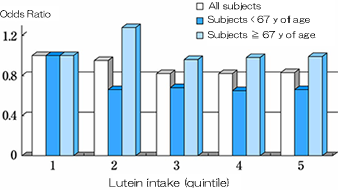


Lutein and Colon cancer
(Martha L Slattery et al. Am J Clin Nutr 2000;71:575-82)

To objective of this study was to evaluate associations between dieatary lutein and other carotenoids and the risk of colon cancer.
Data were collected from 1993 case subjects with first primary incident adenocarcinoma of the colon and from 2410 population-based control subjects.
In this results, lutein was inversely associated with colon cancer in both men and women.

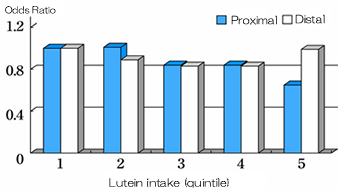
Fig.1: Lutein intake was significantly associated with colon cancer in persons in whom cancer was diagnosed before the age of 67 y .

@

Fig.2: Evaluation of associations between carotenoid intakes and colon cancer by site of tumor within the colon showed that a high intake of lutein was inversely associated with risk of proximal tumors .

@


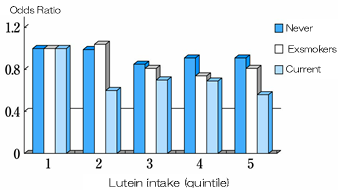
Fig.3F Assessment by smoking status showed that lutein intake was more strongly associated with risk of colon cancer in current smokers than in subjects who had never smoked.

Conclusion
In summary, data from this study suggest that lutein may protect against colon cancer. There are biological reasons to support this finding. Although data from other epidemiologic studies are generally lacking, the relatively consistent inverse associations between intake of plant foods, especially vegetables, and colon cancer may be relevant because dietary lutein is obtained almost entirely from vegetables. The findings reinforce the hypothesis that plant foods, perhaps specific kinds, are beneficial in reducing the risk of colon cancer.


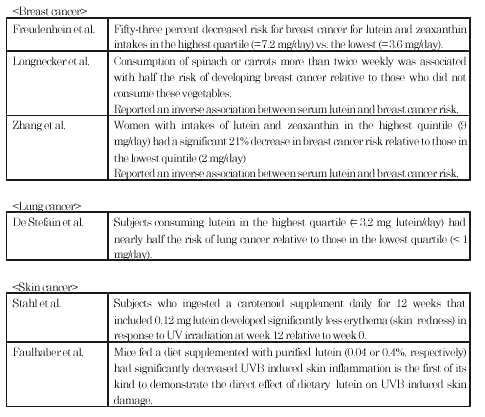
Lutein and cancer

@

Lutein and Cataract

(Lisa Chasan-Taber et al. Am J Clin Nutr 1999; 70: 509-516)

Oxidation of lens proteins plays a central role in the formation of age-related cataracts, suggesting that dietary antioxidants may play a role in prevention. However, the relation between specific antioxidants and risk of cataract remains uncertain.
Our objective was to examine prospectively the association between carotenoid and vitamin A intakes and cataract extraction in women.

Subjects: nurses, 45-71 years old
Person-years: 761,762
Period: 12 years

Results:
Lutein/Zeaxanthin intake and relative risk (RR) of cataract extraction according to quintile of energy-adjusted nutrient intake


Conclusion
In summary, our prospective findings, and those of others, suggest that dietary carotenoids may contribute to protection against cataracts. Of the specific carotenoids, lutein and zeaxanthin may provide the greatest protection. Intake of spinach and kale, 2 lutein-rich vegetables, in particular, may be associated with a reduced risk.

@

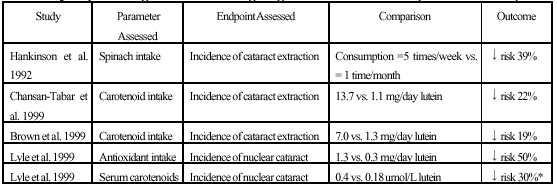
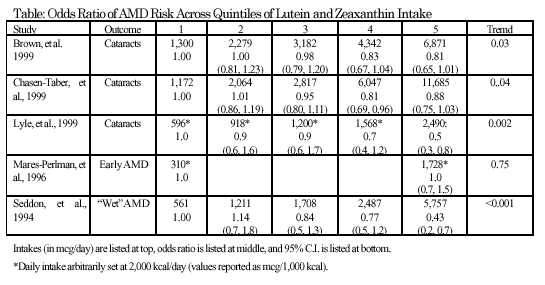
Summary of epidemiological studies investigating lutein and cataract risk (JAMA Vol.4 No.2)

@

Chronic administration of pharmacologic doses of vitamin E improves the cardiac asutonomic nervous system in patients with type 2 diabetes (Am J Nutr 2001; 73: 1052-1057)

Design: double-blind randomized controlled trail
Subjects: 50 patients with type 2 diabetes were assigned to treatment with vitamin E (600 mg/day) or placebo for 4 month.
Results:
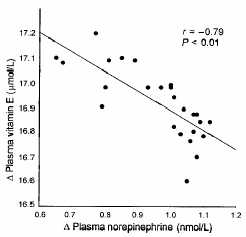
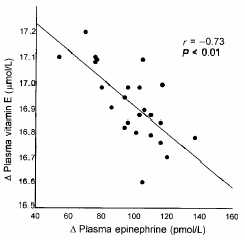
Chronic vitamin E administration was associated with decreases in concentrations of glycated hemoglobin (P<0.05), plasma insulin (P<0.05), norepinephrine (P<0.03), and epinephrine(P<0.02); and improved indexes of oxidative stress.
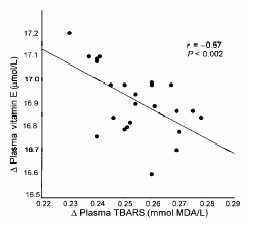
Vitamin E treatment siginificantly increased plasma vitamin E concentration and the TEAC and significantly decreased plasma catecholamine concentration and TBARS concentrations.

Fig.1: Simple correlations between the change in the plasma vitamin E concentration and the plasma concentrations of thiobarbituric acid-reactive substances(TBARS) in vitamin E-treated patients with type 2 diabetes (n=25).

Fig.2: Simple correlations between the change in the plasma vitamin E concentration and the change in the plasma norepinephrine concentration, the change in the plasma epinephrine concentration in vitamin E-treated patients with type 2 diabetes (n=25).

@

Discussion
Our results show that chronic vitamin E administration reduces plasma indexes of oxidative stress and plasma catecholamine concentrations and an index of cardiac sympathovagal balance, in patients with type 2 diabetes. Previous studies showed that patients with type 2 diabetes have impaired cardiovascular autonomic activity, characterized by a reduction in parasympathetic tone and relative sympathetic overactivity. Such unbalanced sympathetic-parasympathetic tone seems linked to the degree of oxidative stress and responsible for many cases of sudden death. Therefore, antioxidants, which lower oxidative stress, may exert beneficial effects at the cardiac level by rebalancing autonomic nervous system activity.

Conclusion
Chronic vitamin E administration improves the ratio of cardiac sympathetic to parasympathetic tone in patients with type 2 diabetes. Such an effect might be mediated by a decline in oxidative stress.


Application of vitamin E in food products as an antioxidant
Osamu Igarashi, Professor, Department of Life Sciences, Ibaraki Christian University

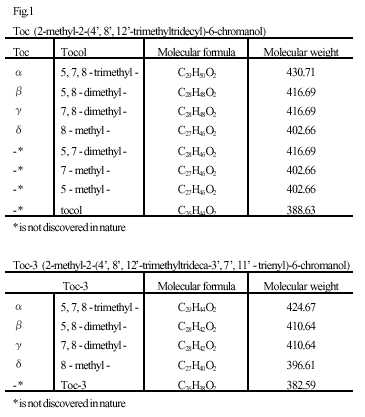
There are 8 types of isomers for natural vitamin E, -, -, -, -tocopherol and tocotrienol, of which -tocopherol is well-known to be the isomer with highest level of bioactivation. The differences among these isomers are made by the number and the location of methyl group on the chroman ring of tocopherol (Fig.1) (There are three double-bonds on the side chain in tocotrienol).

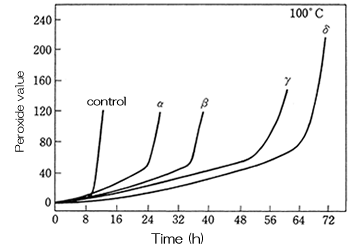
However, their physiology does not matter when they are used in food products, and a mixture of -, and -tocopherols is normally used because vitamin E is desired to have lasting antioxidant functions. That is, the main source of vitamin E is a fraction called "scum" that is obtained in steam distillation which is one of the refining processes of vegetable oil (mainly soybean oil). Since this fraction contains components other than vitamin E that are easily distilled, there is a need to refine and extract only vitamin E. Although the -tocopherol fraction of this vitamin E fraction is used as a drug, vitamin E in soybean oil originally contains more -, and -tocopherols than -tocopherol. Therefore, soybean oil is suited to obtaining a mixture of -, and -tocopherols. Figure 2 shows a comparison of antioxidative activities when vitamin E congeners are added to oils and fats. It is clear that the antioxidative activities of -, and -tocopherols continue longer than that of -tocopherol. The cause for this difference is that antioxidants with high reactivity against radicals such as -tocopherol are consumed rapidly, while those with low reactivity remain for a long time and are able to exert antioxidative activity for a long time. Such difference among tocopherol congeners is used so that -tocopherol is used in human body, and the mixture of -, and -tocopherols are used as an antioxidant called mixed tocopherol in food products. That is, -tocopherol is used for vitamin E enhancement in food products or nutritional purposes, while mixed tocopherol is optimal for antioxidative purposes in food product lipids. Meanwhile, -tocopherol, which is naturally contained in abundance in wheat embryo bud, etc., is not used as an antioxidant because little is contained in normal high oil/fat content seeds. Furthermore, tocotrienols are not isolated for use although they are rich in palm oil and cereal embryo buds such as rice. In case of palm oil, it is used in coexistence with tocopherols.
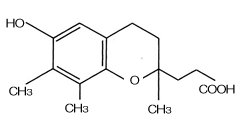
Recently, it has been found that the metabolite of -tocopherol and -tocotrienol facilitate sodium excretion in rats loaded with salt 1). In particular, the fact that administering them with -tocopherol enhances the effect has been confirmed, and the physiological significance of -tocopherol and -tocotrienol is being established. This metabolite is called -CEHC (Fig.3), with no change in chroman ring but only shortened side chain, and it is thought to be conjugated with glucuronic acid (or sulfuric acid) and excreted. This indicates that intake of mixed tocopherol with -tocopherol as a nutritional supplement or drug together would facilitate sodium excretion function of -tocopherol, etc., and examination will be necessary as to what quantitative balance of each is most effective in sodium excretion.
1) Naoko Saito, Chikako Kiyose, Toshio Kondo, Osamu Igarashi, et al.; under submission.


Figure 2 Prevention of Lard Oxidation (100) with Addition of Toc Congeners
(0.1%)

@

Fig.3 -CEHC

@